The Dry Dock Problem: What to Do When You're Stuck in Recovery's Waiting Room
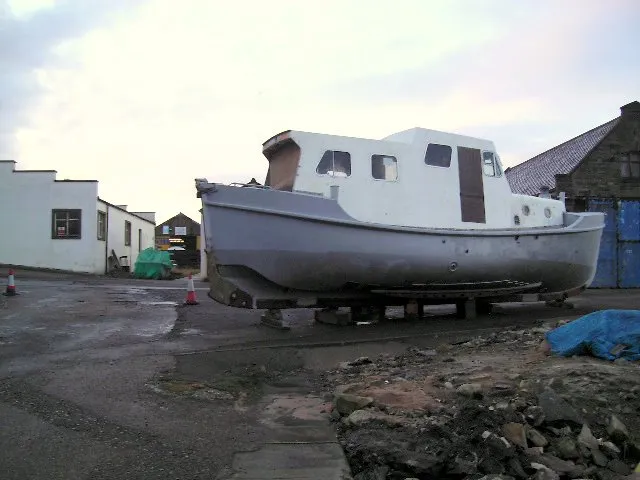
Photo: Ann Harrison, CC BY-SA 2.0, via Wikimedia Commons
There's a stretch of recovery nobody warns you about. Not the storm — you expected the storm. Not the crisis that got you into treatment or therapy in the first place. This is the stretch after all that, when nothing is wrong, but nothing is moving either. Same routines, same check-ins, same you — and the needle on the dashboard of your life just sits there.
We hear from people in this spot all the time at Harbour of Hope. Folks six months sober who feel flat. People whose therapy sessions have become pleasant but pointless. Someone who did the hard work of getting help, survived the early chaos, and now finds themselves in what feels like the waiting room of their own healing.
Here's the truth we want you to hold onto: the plateau isn't a problem with you. It's a phase of the process.
Why Plateaus Happen (and Why Your Brain Loves Them)
Think about how physical healing works. If you break your leg, the first weeks are dramatic — pain, casts, crutches. But the bone doesn't knit at a steady pace you can feel day to day. There are long stretches where nothing noticeable happens while cells do their quiet, invisible work.
Mental and emotional recovery follow the same pattern. Researchers who study behavior change have long noted that progress comes in spikes and plateaus, not a smooth upward line. During the plateau, your brain is consolidating. The coping skills you've been practicing in crisis mode are moving from "emergency effort" to "default setting." That consolidation doesn't feel like progress. It feels like nothing.
Add to that a very human quirk: we're terrible at noticing gradual change. You see yourself every day, the way you see your own face in the mirror. The friend you haven't talked to since spring? They'll notice you sound different before you do.
There's also a subtler reason plateaus feel so demoralizing: early recovery gives you constant feedback. Every day sober is a number. Every therapy session has a breakthrough moment (or at least a good cry). When the feedback dries up, it's easy to conclude the growth stopped too. It didn't. The scoreboard just changed.
The Quiet Danger of "Fine"
Here's what we'd flag, though. Not every plateau is pure consolidation. Sometimes a stall is your mind's way of saying something needs adjusting — a therapy approach that's maxed out, a routine that's become a rut, a support system you've quietly drifted from.
So how do you tell the difference between a healthy pause and a slow leak?
Ask yourself a few honest questions:
- Am I still doing the basics, or have I started skipping things "just this once"?
- When I imagine six months from now, is there anything I'm looking forward to?
- Am I avoiding my support people because I'm busy, or because I don't want to admit I'm struggling?
If the answers lean toward skipping, numbness, and avoidance, that's not a plateau — that's drift. And drift is fixable, but it starts with naming it. Tell your therapist. Tell your sponsor. Tell the group chat. Plateaus respond to patience; drift responds to course correction.
What to Actually Do While You're in Dry Dock
Okay. You've assessed. It's a plateau — no crisis, no red flags, just a long flat stretch of water. Here's your playbook.
1. Change how you measure, not what you do
If you're tracking days, try tracking something else: nights you slept well, moments you noticed yourself enjoying something, times you chose a healthy response without thinking. Keep it simple — a note on your phone works. Over a few weeks, you'll often spot movement the day-to-day view hides.
2. Shrink the goal until it's almost embarrassing
Plateaus are the worst time for big ambitions and the best time for tiny ones. Not "get back into running" — "put my shoes on and walk to the end of the block." Small wins restart momentum, and momentum, not motivation, is what actually carries you out of a stall.
3. Introduce one new variable
Boats in dry dock get maintenance and repairs before they're relaunched. Use the flat stretch the same way. Try a different therapy format — a skills-based group, an EMDR session, a weekend workshop. Volunteer somewhere with no connection to your own story. Learn something with your hands. New input gives your brain new material to grow with, and it shakes loose the assumption that you've seen everything recovery has to offer.
4. Practice being okay with okay
This might be the deepest work of the plateau. A lot of us came into recovery from chaos, and somewhere along the way, intensity started to feel like the only proof that anything mattered. Calm can read as boring. Stable can read as stuck.
It's not. Learning to sit in a season where the headline is "nothing bad happened today" — and letting that be enough — is its own kind of healing. Some people spend years paying tuition to learn it. You get to practice it for free, right now, in the middle of your so-called stall.
5. Tell someone you're plateauing
Say it out loud, in those words. "I'm not struggling, exactly. I'm just stuck." You'll be surprised how many heads nod. Plateaus are one of the most universal experiences in recovery and one of the least talked about, because nobody thinks their boredom qualifies as a legitimate struggle. It does. And naming it out loud takes away half its weight.
The Tide Comes Back
Here at Harbour of Hope, we like the harbor metaphor, but there's one about dry docks worth adding: boats don't stay in dry dock forever. They're pulled out of the water for a reason — inspection, repair, strengthening the hull. Then they're relaunched, often sturdier than before.
If you're in the waiting room of your recovery right now, you're not broken and you're not finished. You're in maintenance. The quiet work is happening whether you can feel it or not.
Keep showing up. Keep the small habits running. Change one thing if it helps. And when the momentum returns — because it does — you'll look back at this flat stretch and recognize it for what it was: not the end of your progress, but the part of the journey that made the next leg possible.
You're still under way. Even at anchor, you are.